Purchasing a yearling Thoroughbred with a racing partnership begins a journey toward transforming a young horse into a finely tuned athlete ready for the racetrack. The months between the sales ring and a horse’s debut on the track are crucial for building the foundation of its racing career. Breaking and training yearlings requires patience, expertise, and a finely tuned approach to developing their physical and mental capabilities.
Many West Point yearlings undergo the breaking and training process under the watchful eye of Dr. Barry Eisaman, one of the best young horse developers in the history of the sport. Watch our webinar where Dr. Eisaman reviews the yearling breaking process.
Here’s an overview of what goes into preparing a yearling Thoroughbred for the racetrack after they are purchased:
Step 1: Transition from Sales to Breaking Farm
Once West Point yearlings are purchased at auction, they head to a training center in Ocala, Florida.
For many horses, being on the sales grounds is their first time leaving the farm where they were born. After purchase, they experience their first long van ride to the Sunshine State.
Farm trainers give the youngsters a few weeks to settle in and acclimate to their new surroundings following the rigorous sales process.

Horse of the Year Flightline as a yearling
Step 2: Introducing Basic Handling and Routine
Once the yearling has settled, it’s time to begin breaking—a process that involves teaching the horse basic ground manners and how to respond to human cues. At this stage, fundamental skills are revisited. Horses who have undergone the auction process are used to leading and being handled daily, but after a few weeks of downtime post-sale, it’s essential to revisit the basics:
- Leading: Walking calmly while being led with a halter and lead rope.
- Standing tied in the stall: Learning to stand patiently while being groomed or handled.
- Grooming and handling: Becoming accustomed to daily care routines, including grooming, hoof care, and vet checks.
- Lunging: Yearlings are taught to move in a controlled circle around the handler on a lunge line, helping to develop balance and responsiveness.
This phase can take several weeks and is critical in shaping the horse’s future behavior. Handlers work to create positive, respectful relationships with the horses, ensuring they are comfortable around humans and willing to learn.

Learning to tie in the stall, be handled daily by grooms
Step 3: Saddling and Backing
Once the yearling has mastered basic ground manners, it’s time to introduce the tack. This begins with saddling. Trainers will gradually introduce the saddle, ensuring the young horse is comfortable with the feel of it on their back.
One of the most important parts of teaching a horse to accept the saddle is tightening the girth around the barrel and the stirrups hanging along their sides. Horses gradually get used to these two things without the rider’s weight. The girth is progressively tightened to reduce the risk of the horse becoming tight, tense, or anxious.
Following saddling, the process of “backing” begins, which means teaching the horse to accept a rider. This is often done slowly and in stages. At first, the rider may only sit lightly on the horse’s back in the confines of the stall, allowing the horse to get used to the sensation. Over time, the rider will guide the horse at a walk, then a trot, ensuring the horse is balanced and responsive.
A young horse goes from stall to shedrow before venturing out of the barn with a rider on their backs.

Grade one winner Ring Weekend as a yearling being ridden in the barn’s shedrow.
Step 4: Learning to Gallop and Transitioning to a Training Schedule
Once the yearling has become comfortable under saddle, the focus shifts to more athletic training. This includes learning to:
- Trotting: May horses start their under tack training walking and trotting in a large, open field with a group of their peers. They learn basic aids from the rider — moving forward and coming back and turning. After a few days to weeks in the field, they often move to the training track and start galloping.
- Gallop: Yearlings are taught to move at a controlled, steady gallop. At first, they work in straight lines or on large circles to develop strength, balance, and coordination. Lead changes beginning at a controlled canter/gallop are important to the learning process.
- Gate work: Young horses are introduced to the starting gate, an essential skill for racehorses. The goal is for them to load into and break from the gate smoothly. This process often starts with them walking in and out daily before they are ever closed in. The goal is to make the gate experience no big deal!
- Speedwork: After several months of galloping, horses start light speed work. This process is accelerated for horses preparing for a 2-year-old in training sale. But for our yearlings preparing to head to their racetrack trainer, this often starts toward the end of the first quarter.

Galloping in company on the training track
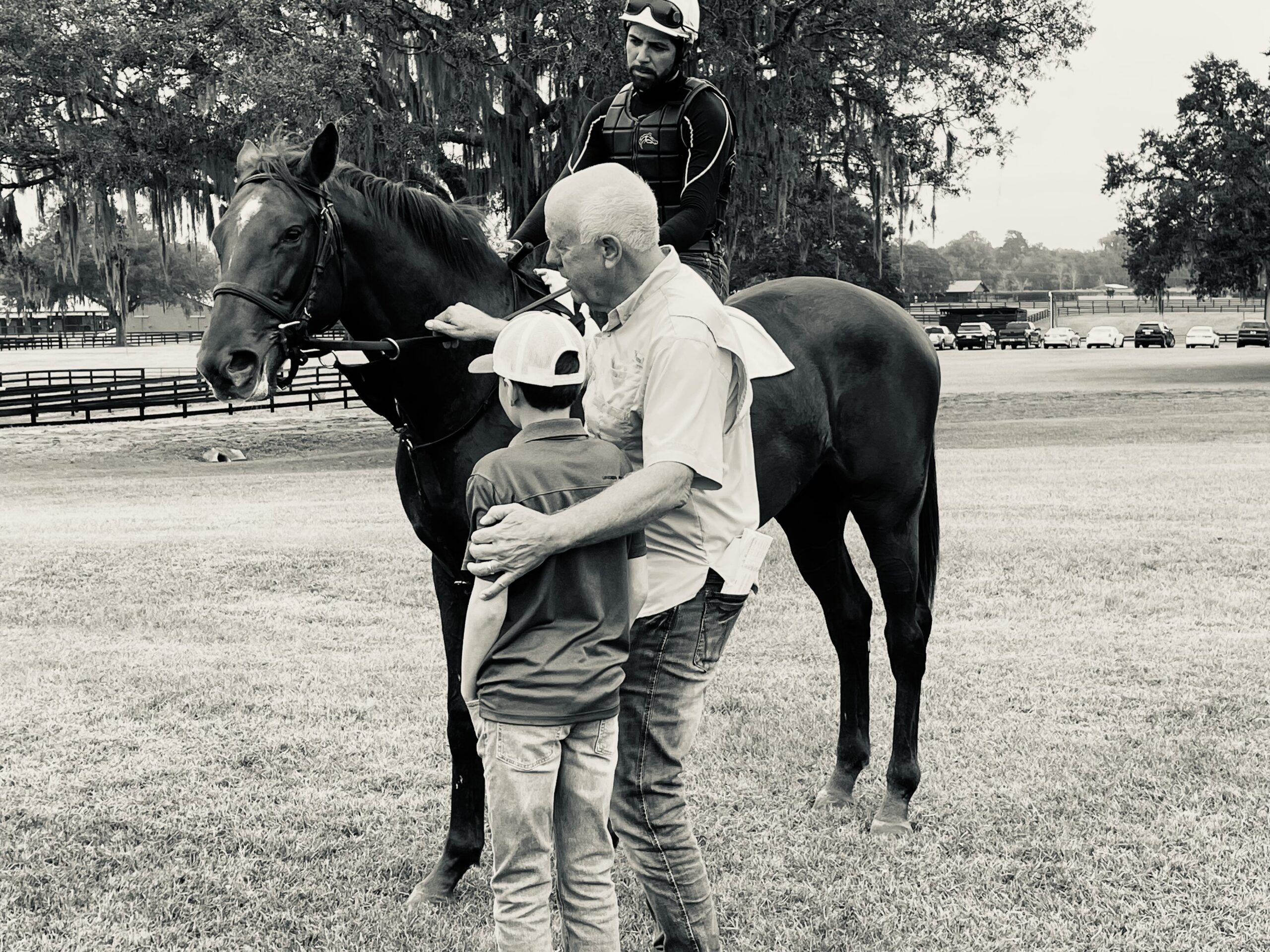
Scene from a West Point yearling showcase in Ocala, Florida

Yearlings training on a beautiful morning in Ocala, Florida
Step 5: Heading to A Racetrack Trainer
Each trainer has their preferences. Some want the horses in their care as early as possible, and others prefer that they start speedwork in a farm setting to establish a certain fitness level and ensure the horse can handle the increased intensity.
Just because a horse isn’t among the first to leave the training center doesn’t mean their racing success is doomed. West Point graded stakes horses have left the training centers at various points during their training journeys. Every horse is an individual and develops at different rates. Also, common yearling and 2-year-old injuries could cause shipping delays (more on those in a subsequent blog).
Breaking and training yearling Thoroughbreds is an art that blends patience, consistency, and expertise. The months between the sales ring and the racetrack are formative for these young horses, laying the foundation for their racing careers. Each step, from learning basic ground manners to galloping on the track, is vital in ensuring these young athletes are ready to perform at their best when they step into the starting gate for the first time.

Grade 1 winner Vahva with trainer Cherie DeVaux